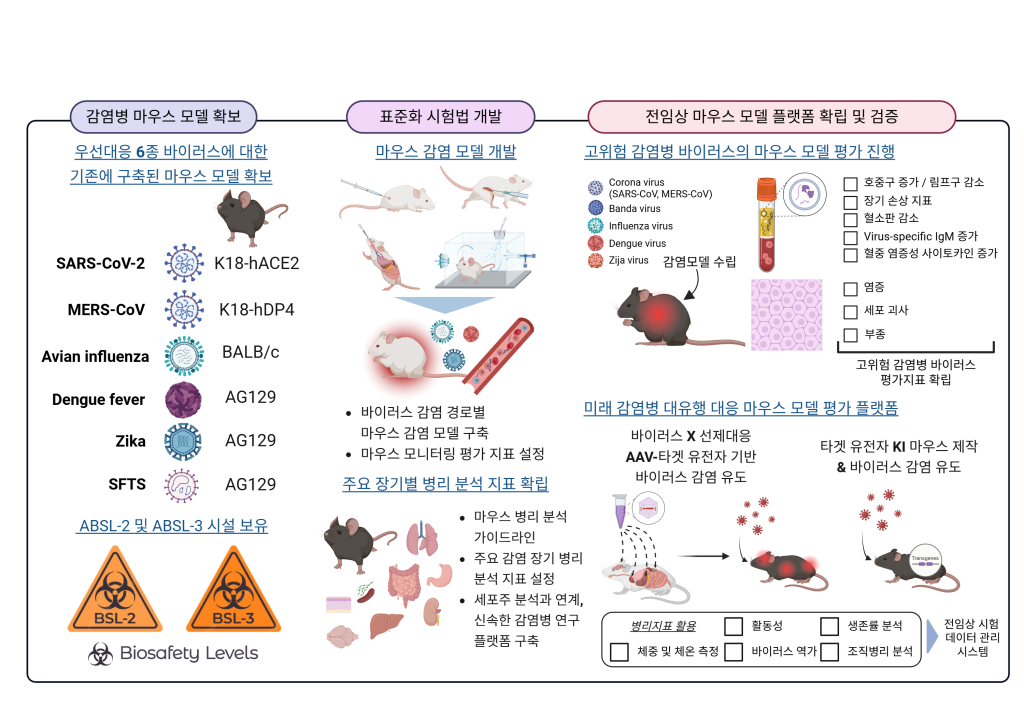
Development of Infectious Disease Models for Pandemic Preparedness
We all remember the years when the world came to a halt during the COVID-19 pandemic. During that time, even laboratory mice could not be infected naturally with the virus. Without suitable animal models, it took years to understand pathogenesis and to develop effective vaccines and therapeutics. And even when promising drugs and vaccines were developed in animals, many ultimately failed in human trials — a stark reminder that our models must better reflect real disease biology. That experience taught us a critical lesson: when a new pathogen emerges, having rapid and reliable animal models can make the difference between containment and catastrophe.
We are establishing infection models that can respond rapidly and reproducibly to emerging pathogens. With the ABSL-2 and ABSL-3 facilities at Seoul National University, we work across species, from rodents to nonhuman primates, to study host–pathogen interactions, define pathogenic mechanisms, and identify promising therapeutic and preventive strategies.
Our efforts aim to strengthen Korea’s capacity for pandemic preparedness, while improving the scientific reliability and translational value of infection models that serve both human and animal health, guided by the vision of One Health and One Welfare.