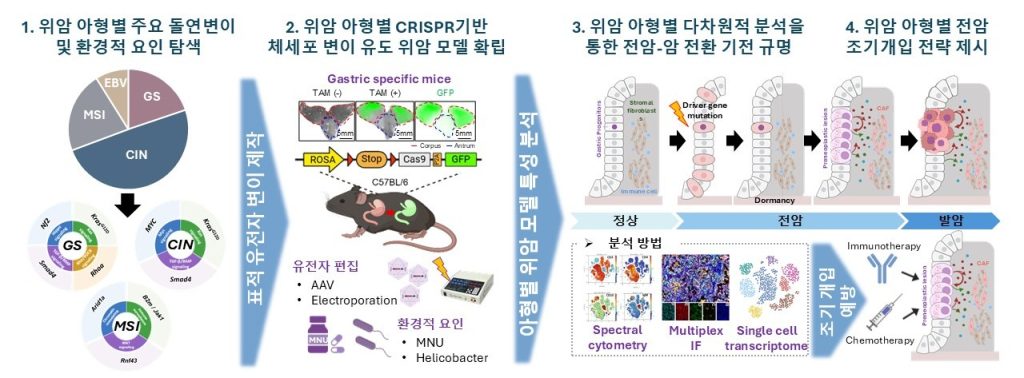
Our laboratory uses CRISPR-based somatic genome editing to build genetically defined in vivo cancer models that capture the earliest steps of tumor initiation and progression. Rather than generating tumors as end products, we use these models to address fundamental biological questions: which cells give rise to cancer, how epithelial plasticity is triggered and constrained, and how genetic alterations reshape tumor behavior over time.
By integrating somatic genome editing, organoid systems, pathology, and functional in vivo studies, we investigate cancer as a dynamic process rather than a static endpoint. This approach allows us to reconstruct the stepwise evolution of tumors and to define how specific driver mutations influence cell-state transitions, tissue architecture, and disease trajectory.
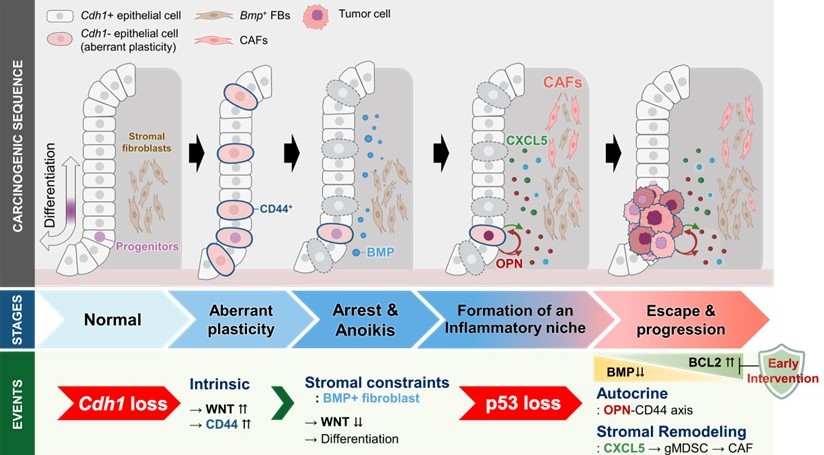
A major focus of our work is to understand how tumors interact with their surrounding niche. We study how stromal signals, immune components, and inflammatory microenvironments regulate tumor initiation, dormancy, escape, and malignant progression. In particular, we seek to uncover how epithelial plasticity and microenvironmental crosstalk cooperate to create conditions that support cancer evolution.
Ultimately, our goal is not only to model cancer with precision, but to identify mechanism-based therapeutic opportunities. By linking genetic context to tumor origin, plasticity, and niche remodeling, we aim to reveal actionable vulnerabilities and propose new strategies for early intervention and treatment.
그림 1. 위암 아형별 체세포 유전자 편집 모델 구축 및 조기 개입 전략
그림 2. 본 연구팀이 제안하는 위암의 단계적 진행 모델: 상피 가소성, 기질 억제, 염증성 niche 형성, 그리고 진행 과정