Research AreaⅠ
CRISPR-based Somatic Modeling of Cancer
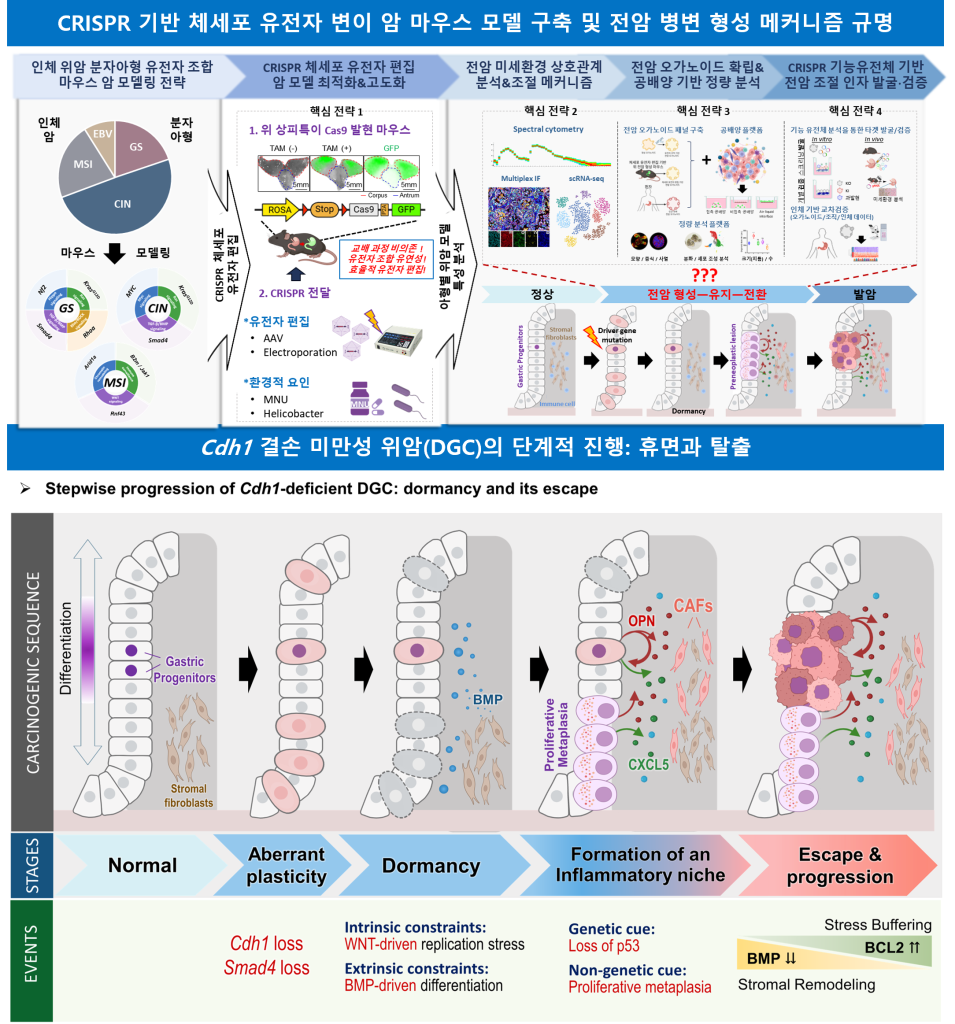
Our laboratory develops genetically precise and rapid-response in vivo cancer models using CRISPR-based somatic genome editing, enabling realistic reconstruction of tumor initiation, progression, and drug responsiveness.
Cancer affects not only humans but also animals. With the growing population of aging companion animals, cancer has become a leading cause of death in dogs and cats, yet precision models for veterinary oncology remain scarce. This CRISPR-based somatic genome editing allows us to create clinically relevant models for cancers in companion animals, which have long been considered unrealistic. We are committed to realizing them, establishing a dual framework that advances precision medicine for both humans and animals.
In human cancer, large-scale genomic analyses have revealed diverse molecular subtypes—each with distinct pathogenesis and therapeutic sensitivity. However, existing animal models fail to capture this genetic and phenotypic diversity with sufficient precision. Through somatic genome editing, we aim to develop adaptive models that accurately represent this biological complexity, allowing us to study how specific genetic contexts shape tumor behavior and treatment response.
In Korea, where gastric cancer remains one of the most prevalent and clinically significant malignancies, we recognize both a scientific opportunity and a national responsibility. We focus on developing accurate, stepwise models of gastric tumorigenesis that recapitulate the molecular alterations and stromal interactions driving disease progression. By integrating somatic genome editing with organoid and in vivo systems, we aim to dissect how epithelial plasticity, microenvironmental signaling, and genetic context converge to shape pathogenesis and therapeutic response. These efforts provide a robust framework for precision oncology and early intervention in gastric cancer.